This is a little thought experiment I adapted from a book (see below).
Write an infinity symbol with your writing hand (something you've probably done before). Now switch and write it with your left hand (something you've probably NOT done before). See, it can be done with your left hand without any practice, or without too much stumbling (although not perfect, see my attempt below). How is that? What did we learn about the brain that said, hey, something we've done with our right hand before, we can do with our left, on the first try!
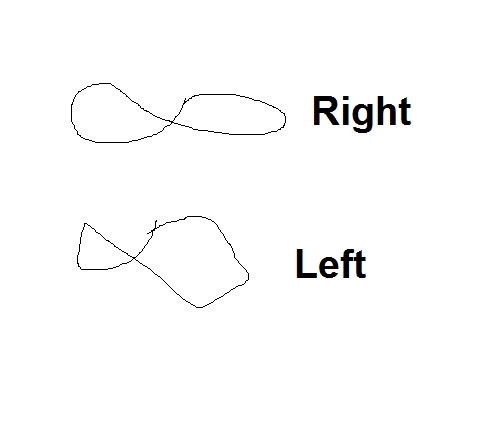
To me, this example proves that the human mind "has representations" for things in it. It proves that those representations can be passed and used by different brain systems. And it proves that it is not a rote mechanical memorization; but rather an impression of vectors of what something should be. It also kind-of shows how the human brain has "daemons" running that handle different tasks. That the left hand could do what the right hand can do, means that the symbols for doing that were connected to neither. That neither hand had the "motor memory" permanent in storage... and that the symbol itself was stored. That the left hand could do it without practice shows that there must be a left-hand system in your brain that knows how to draw curves... and that that system was activated in order to draw the infinity symbol stored in your brain.
How is this useful to Marketing or Management... I'm not sure just yet. But that is the beauty of learning new things... you just don't know how or when or even if it will be useful. I suspect that this little tid-bit will be useful to me in the future though... if it ever is, if I use it to help me manage people or do some marketing magic, I'll let you know!
I adapted this idea form a book I'm reading the book called "How the Mind Works" by Steven Pinker. This and so much more can be found in it! I highly encourage you to read it.
Harlan T. Beverly writes from Austin, Texas about Entrepreneurship, Marketing and Business for Engineers and Other Logical Thinkers.
Wednesday, April 3, 2013
Wednesday, March 20, 2013
Experimenting with Facebook Ads
I've run literally many hundreds of thousands of dollars ($200,000+) of Facebook Ads, and I'm still experimenting.
Yes, I have a formula that works well... and it's called "experimenting".
See, even the most successful mix of target, photo, image, link, landing page, etc... that works this week will lose its effectiveness over time (sometimes in a matter of weeks!)!
So, what I do is religiously experiment... to do this right, I change just 1 variable at at time.
The hard part: measuring actual effectiveness.... to do this: I try to look not just at clicks, but also at conversions. There is a fine balance between conversion rate and click rate. Generally you want to optimize for conversions, but on Facebook, getting a click often means getting viral impressions as well.. and that can lead to 'pseudo-organic' conversion that you don't realize came from viral impressions...
Anyways, for those of you out there experimenting with Facebook Ads.. don't give up. Experimentation is the name of the game.
Thursday, March 14, 2013
Marketing CEOs vs Engineering CEOs
There are pros and cons to both/either.
Pros:
Marketing CEOs might be more likely to inspire market/customer orientation, differentiation, and brand equity focus. This kind of leadership might seek to inspire cooperation and collaboration across departments.
Engineering CEOs may empower development teams to be more creative, have more power, and reduce "feature creep". This kind of leadership might be more organized and measured.
Cons:
Marketing CEOs might put too much fluff into products, and not truly enable disruptive innovation. This kind of leader may also have trouble leading engineers, and other technical types.
Engineering CEOs may invest too heavily in non-market-driven ideas and be inclined to ignore customer needs in favor of their own ideas. This kind of leader may be too rigid for creative types.
Which am I?
Early in my career I would say I was definitely an Engineering CEO. I had a vision where I wanted to go; and the market be damned (disruptive technology is like that). Now, I lean more towards Marketing CEO... with a tighter focus on customer/market, and more faith in the power of brand. However, having experience in both, I think I also have a good ability to know when to be which. I can work with engineers or creative types equally well, and see a disruptive idea (and support it) when needed.
Best of both worlds? :)
Monday, February 18, 2013
Marketing to Adult Males...
Most of my marketing management career has been spent targeting Adult Males ages 18 to 50. I've got a quick rundown here of what I've done that has worked, and what has not worked. If these tips help (or if you disagree/agree), I'd love to hear from you. Reply Below or directly in twitter @hbomber or Facebook.
What Does NOT work:
What Does NOT work:
- Boobs/Sex. Unless you are selling one or the other of these, my experience is that it does not (by itself) work to sell your product. There is a way to use sex appeal in your advertising, but it has to be somewhat subtle & connected.
- Alcohol. Similar to Boobs/Sex, it does not work unless it's exactly what you are selling.
- Sports. Similar to Alcohol, unless sports is the target, this does not work.
- Lots of Words. The more words, the less effective.
- Branded Feature Words. Branding your features is not a good strategy for this market. (or any market really).
- Over-stated claims. This just does not work; see right through it.
What HAS worked:
- Honesty/Directness. Being honest about what you have/don't have works. People want to be informed, as fast as possible.
- Clever Wordings. Being clever can get attention with this group.
- Good and Real photos/drawings of your products... if it involves women or boobs in some non-obvious way.. that's fine. You get the idea... subtle.
- Benefits & Features. Being clear about what benefits and features of your product (in a brief way) works.
- Value. Explaining the value/savings/math behind your products works.
- Passion. Show the passion you/your team has for your products in whatever way makes sense... (yes, cool videos of you loving your products/using them works).
What works/doesn't work for you?
Subscribe to:
Posts (Atom)

